Flagship whale guide · 2026 season
Whale watching in Hervey Bay: the complete season guide
When the 2026 season runs, why Platypus Bay matters, what the boats are really like and how to plan for children, motion and photography.
The short version
Know this before you plan
- Core operating window: mid-July to late October for most 2026 commercial trips; exact dates differ by operator.
- Best all-round months: August and September sit in the middle of the season, but behaviour is never guaranteed.
- Departure area: the Great Sandy Straits Marina, Whale Bay Marina and Boat Club harbour precincts in Urangan.
- Choose by: time on the water, vessel movement, viewing space, shade, toilets and access—not a generic “best boat” claim.
- Plan B: book early in a multi-night stay so a weather cancellation does not remove your only chance.
The season: use operator dates, not a slogan
Hervey Bay’s broad whale-watching season is commonly described as July to November, but the bookable 2026 season is narrower for most boats. Current operator pages cluster around mid-July to late October. Tasman Venture, for example, publishes 11 July–25 October 2026, while other operators start or finish on their own dates. If you are travelling in early July, late October or November, open the live booking calendar before arranging the rest of the trip.
August and September are the most defensible general recommendation because they fall in the middle of the migration stopover and overlap the strongest concentration of scheduled departures. They are also popular travel months. The late-August Whale Festival and the September school-holiday period create genuine reasons to reserve marina-side accommodation, family apartments and preferred cruise times earlier.
The mix of animals can change through the season. Earlier weeks may include whales moving through; later weeks are associated with more mothers and calves using the bay. Treat that as a broad ecological pattern, not a timetable. Migration timing, weather and the whales’ choices vary from year to year and from one departure to the next.
Why Hervey Bay and Platypus Bay are different
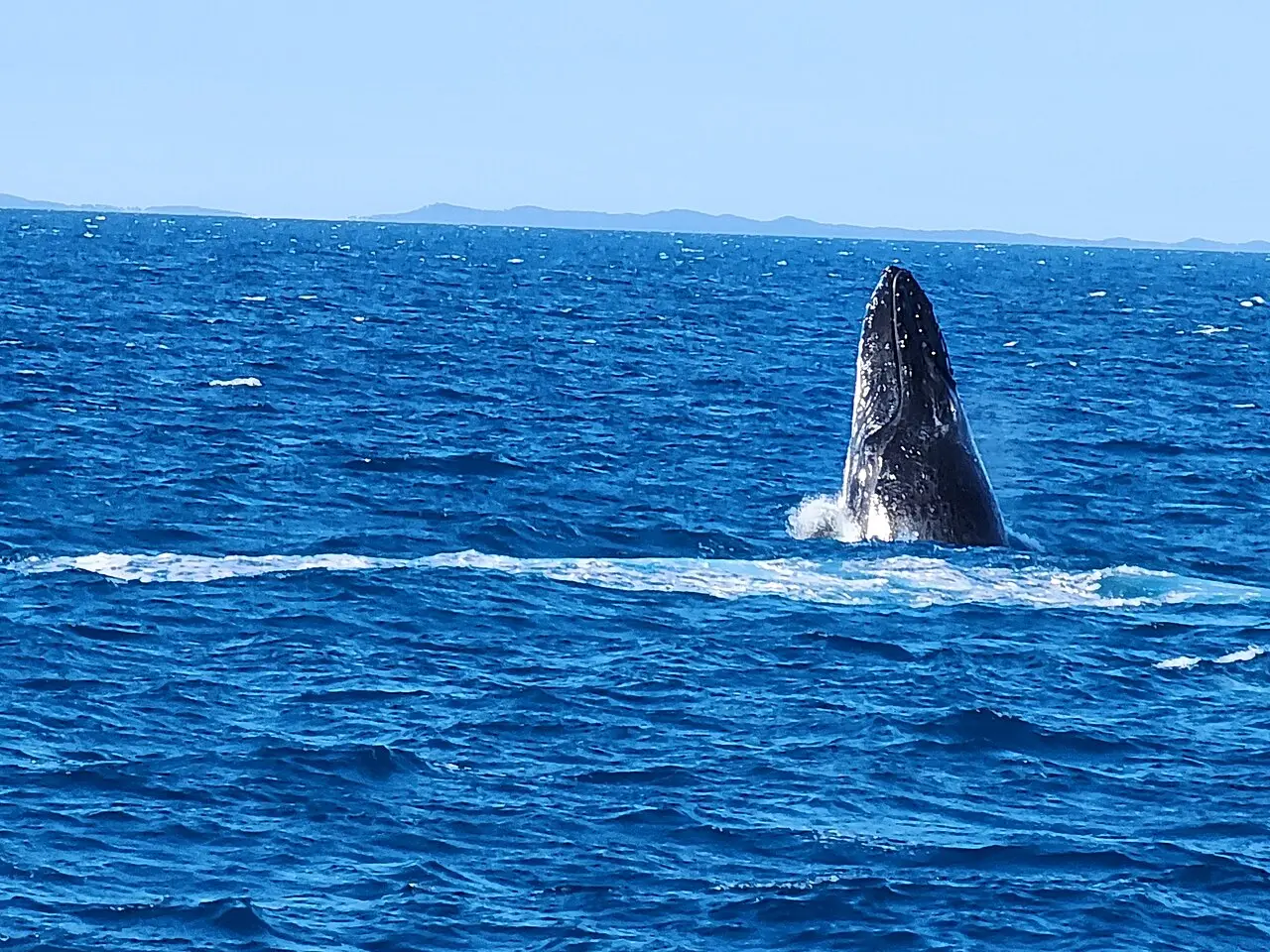
K’gari sits between Hervey Bay and the open Coral Sea, reducing the direct ocean swell that reaches the bay. Humpbacks use the protected water on the island’s western side—including Platypus Bay—as a stopover on the southern migration. Official and operator sources describe resting, socialising, courtship and later-season mother-and-calf behaviour. That is the useful distinction: boats are not simply intercepting whales passing a headland.
The word “sheltered” needs context. Hervey Bay is still a large body of water. Wind can build short chop, the run from Urangan to likely whale areas takes time, and small craft move differently from large catamarans. A glassy marketing photograph cannot answer whether your particular sailing will be calm.
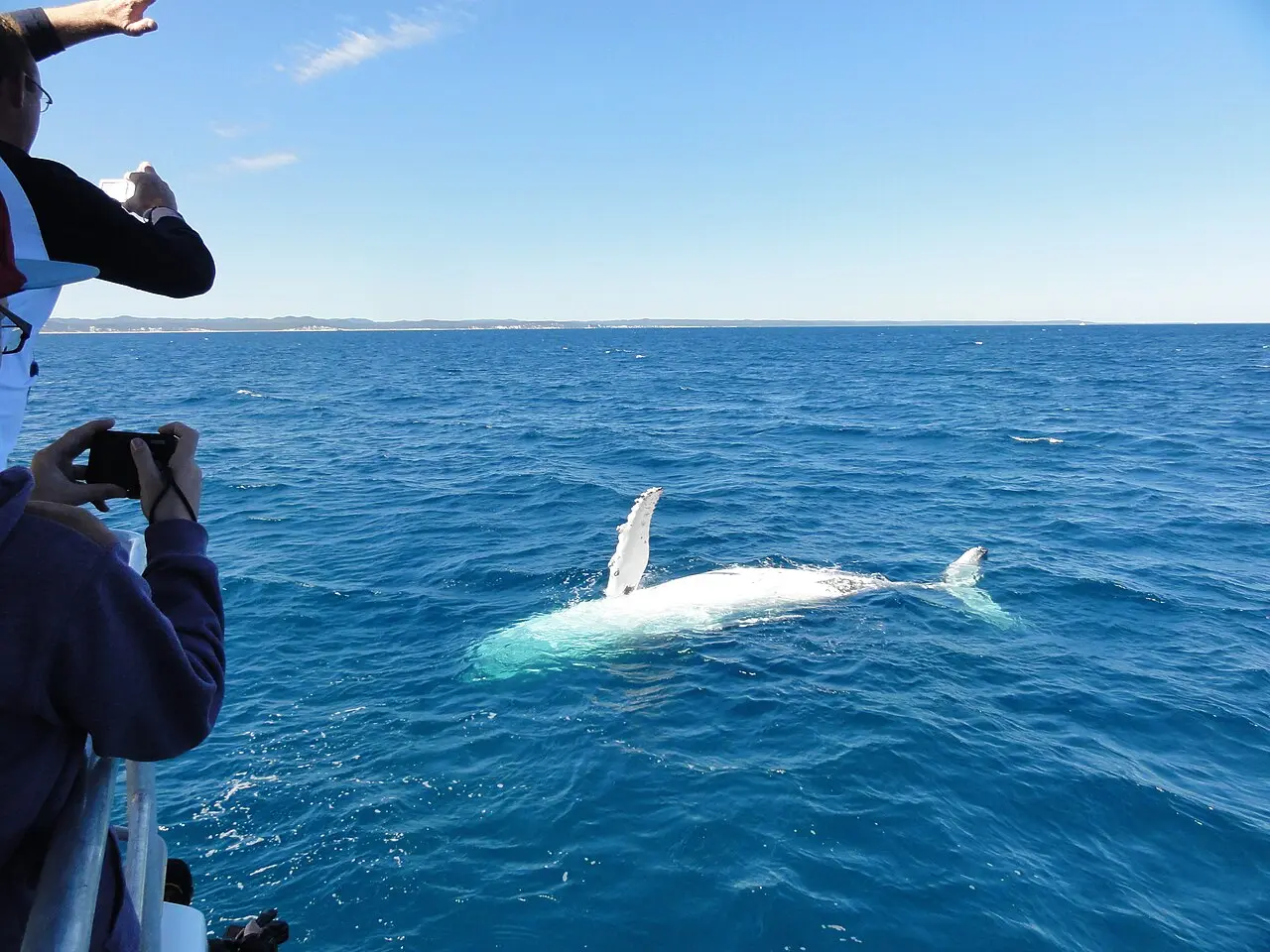
Hervey Bay was recognised as the first Whale Heritage Site by the World Cetacean Alliance in 2019. The designation supports responsible cetacean tourism and community connection; it does not promise a closer encounter. A whale may approach a correctly operated vessel, but the skipper cannot manufacture breaching, spy-hopping or “mugging”.
What a half-day or longer cruise actually feels like
Most visitors choose a three- to five-hour morning or afternoon product. The first part is the run from the harbour towards K’gari and the likely search area. Crew scan for blows, splashes and movement; once whales are located, the skipper works within approach rules while the animals may travel, rest, surface close by or remain distant. The return run can include further sightings but should not be treated like a train with a second-by-second arrival.
Longer products can mean more search time, a slower vessel, meals, or a combined K’gari component. Read the itinerary rather than equating “full day” with twice as long beside whales. A longer day may suit adults who want the cruise to be the main event. A half day is usually easier for young children, tight itineraries and anyone unsure about motion.
Fast vessels can shorten transit, while larger catamarans can provide more deck choice, indoor seating and a steadier-feeling platform. Neither format wins universally. The operator comparison puts current duration, vessel and displayed price in one dated matrix.
Choose a boat around the people travelling
Start with physical needs. Ask whether there is protected seating, how many stairs separate decks, whether the toilet is accessible, how boarding works at the tide, and whether the advertised vessel is scheduled for your departure. “Wheelchair friendly” can describe one part of a marine journey while the gangway or toilet remains unsuitable; describe the equipment and assistance needed when you contact the operator.
Families should confirm infant acceptance, pram storage, rails, child fares, food and the availability of a quiet indoor area. Photographers may value open rail space and several viewing heights. Travellers prone to motion may prefer a larger platform and a morning departure, but forecast and hull design matter more than a blanket rule.
- Small vessel: fewer passengers and a direct feeling, with more noticeable motion possible.
- Large catamaran: more viewing areas, shelter and facilities, but more people moving to the active side.
- Water-level platform: valuable when open and accessible; verify how it is used and reached.
- Sailing catamaran: a longer, quieter day for travellers who enjoy time on the water as much as the sighting.
Seasickness, children and comfort
Plan for motion before boarding. If you know you become unwell, ask a pharmacist or doctor about a suitable medicine and follow its timing instructions; this matters for children, pregnancy and medical conditions. Eat lightly, drink water, stay in fresh air, face forward and look at the horizon. Avoid reading and repeated photo review while the boat is moving.
Pack for wind rather than the temperature outside the accommodation. A light insulating layer and wind-resistant top are useful even on a sunny day. Add flat grippy shoes, sunscreen, a secure hat, sunglasses, water and a dry pouch. Check whether food is included, sold on board or may be brought with you.
With children, explain that the boat is searching for wildlife and there can be quiet stretches. A small pair of binoculars and a checklist for blows, backs, tails and seabirds gives them something to do without promising constant action. The honest expectation is a marine trip with the possibility of remarkable moments, not a staged show.
Photography without spending the encounter on a screen
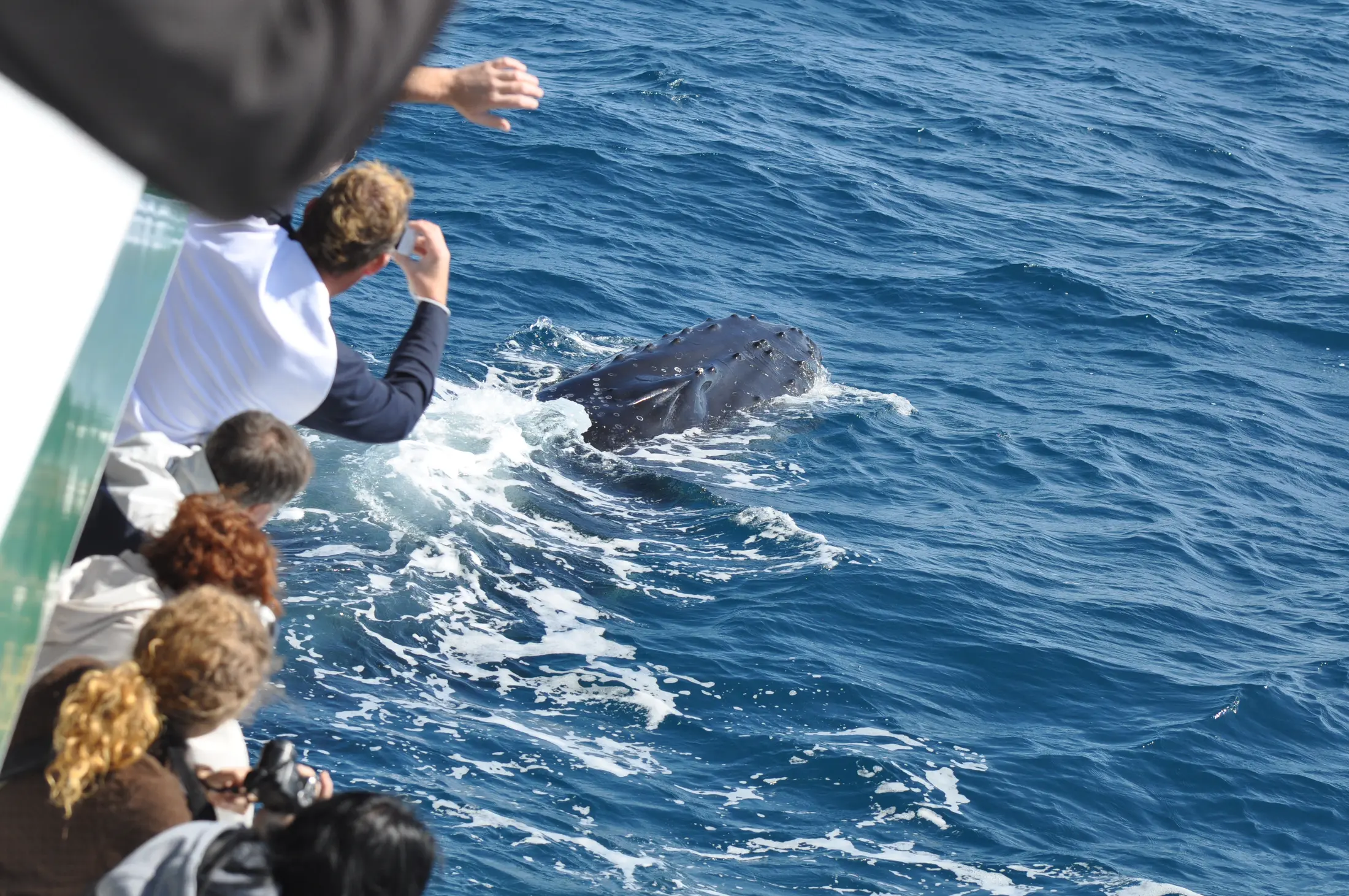
Clean a phone lens before departure, use burst mode and avoid extreme digital zoom. Two hands, a level horizon and short video clips produce more usable results than following a whale through the screen for minutes. Put the phone down between sequences so you still see the scale and movement.
For an interchangeable-lens camera, a mid-range telephoto is easier on a moving deck than an extreme long lens. Use a fast shutter speed, continuous autofocus and burst shooting for breaches and tail slaps. Keep a wider setting ready for an animal that surfaces beside the vessel, protect equipment from spray and attach the strap.
Never fly a drone from the boat or around whales without understanding the aviation, marine-park and wildlife restrictions. The simpler, safer option is to photograph from the passenger deck and follow the crew’s directions.
Booking checks that prevent avoidable problems
Before payment, confirm the exact marina, check-in time, likely return window, vessel, minimum age, food, transfers, access and the operator’s weather and customer-cancellation terms. Save the confirmation offline. If a marketplace and direct site show different information, treat the operator’s active booking surface as the final check.
No independent guide can guarantee a sighting. Some operators publish their own return-trip or sighting policy, with conditions. Read the exact wording rather than assuming “guarantee” means a cash refund. Wildlife policies, weather cancellations and change-of-mind cancellations are three different things.
Practical checklist
- Recheck the operator’s 2026 calendar and final price for your exact date.
- Choose the vessel after checking shade, toilets, stairs, child rules and access.
- Schedule the cruise early in the stay and keep the return window flexible.
- Pack warm layers, sun protection, water and a motion plan.
- Confirm the named marina—not simply “Urangan”—before setting a walking route.
Book the cruise around your group, not the breach photograph
For a first Hervey Bay whale trip, August or September, a morning departure and a spare day in the stay form the most forgiving plan. The month puts you inside the core operating window; the spare day gives weather somewhere to move. Neither choice guarantees behaviour, but both reduce avoidable scheduling risk.
Choose the vessel after checking deck access, shelter, toilets, stairs and trip length for the people travelling. Then save the exact Urangan check-in desk. The dated operator matrix is where those practical differences belong; the final booking screen remains the authority for price and availability.
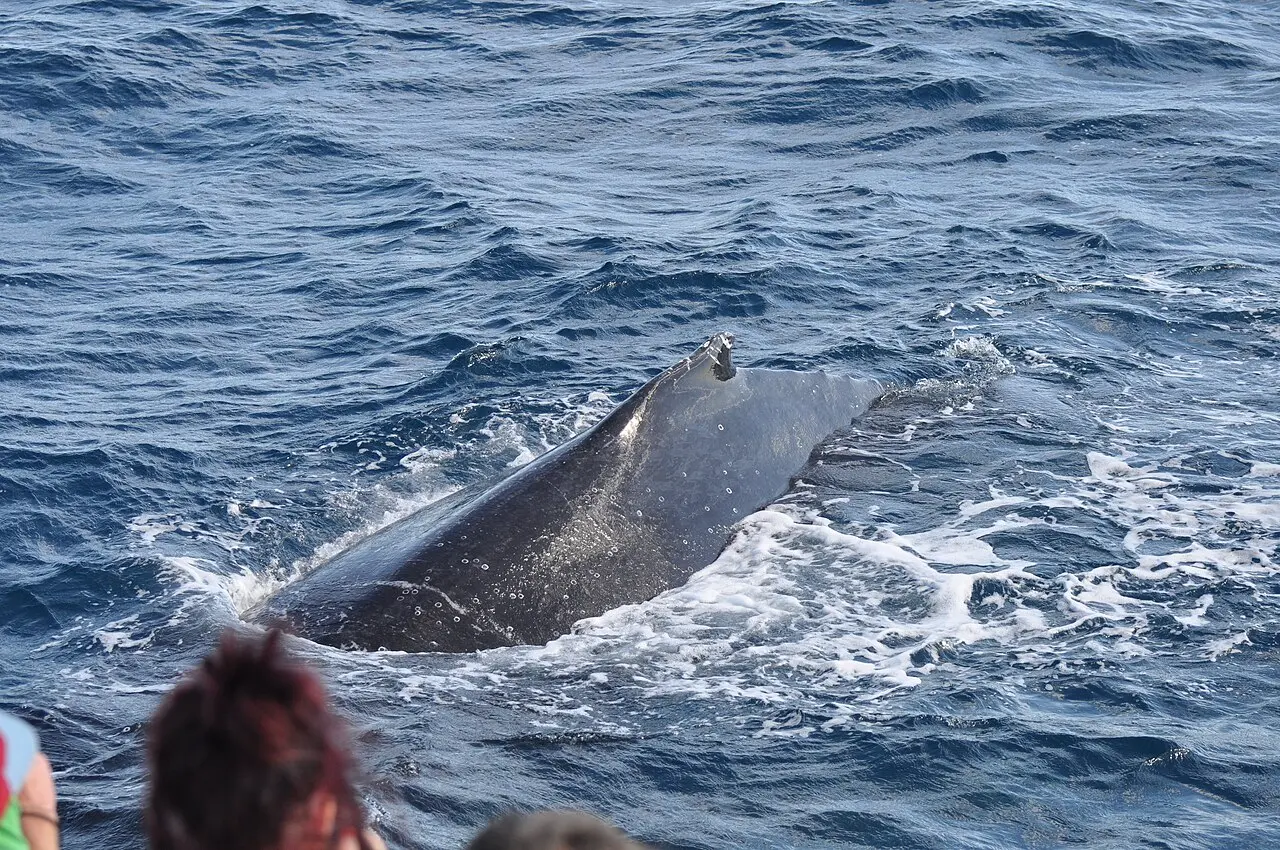
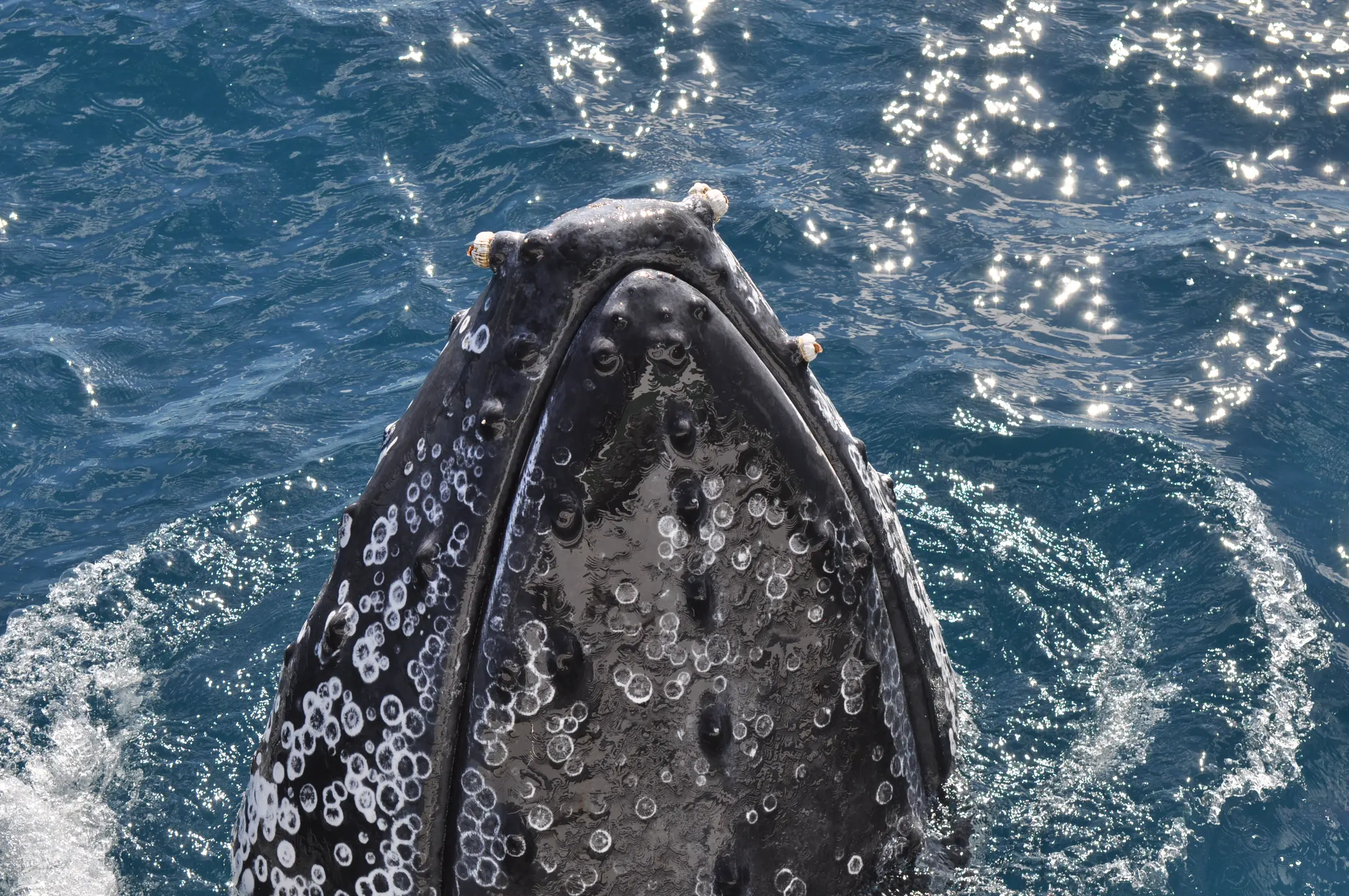
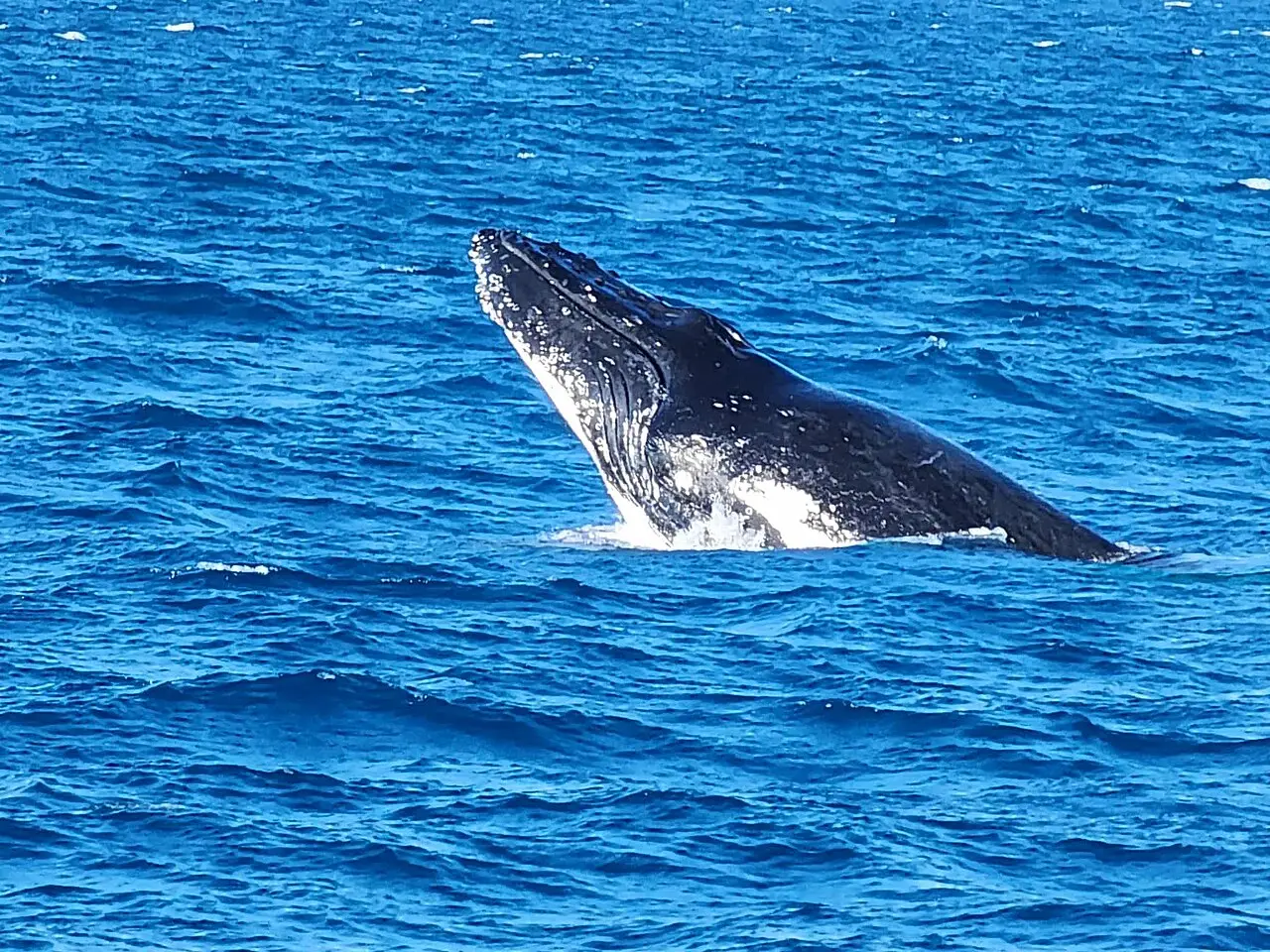
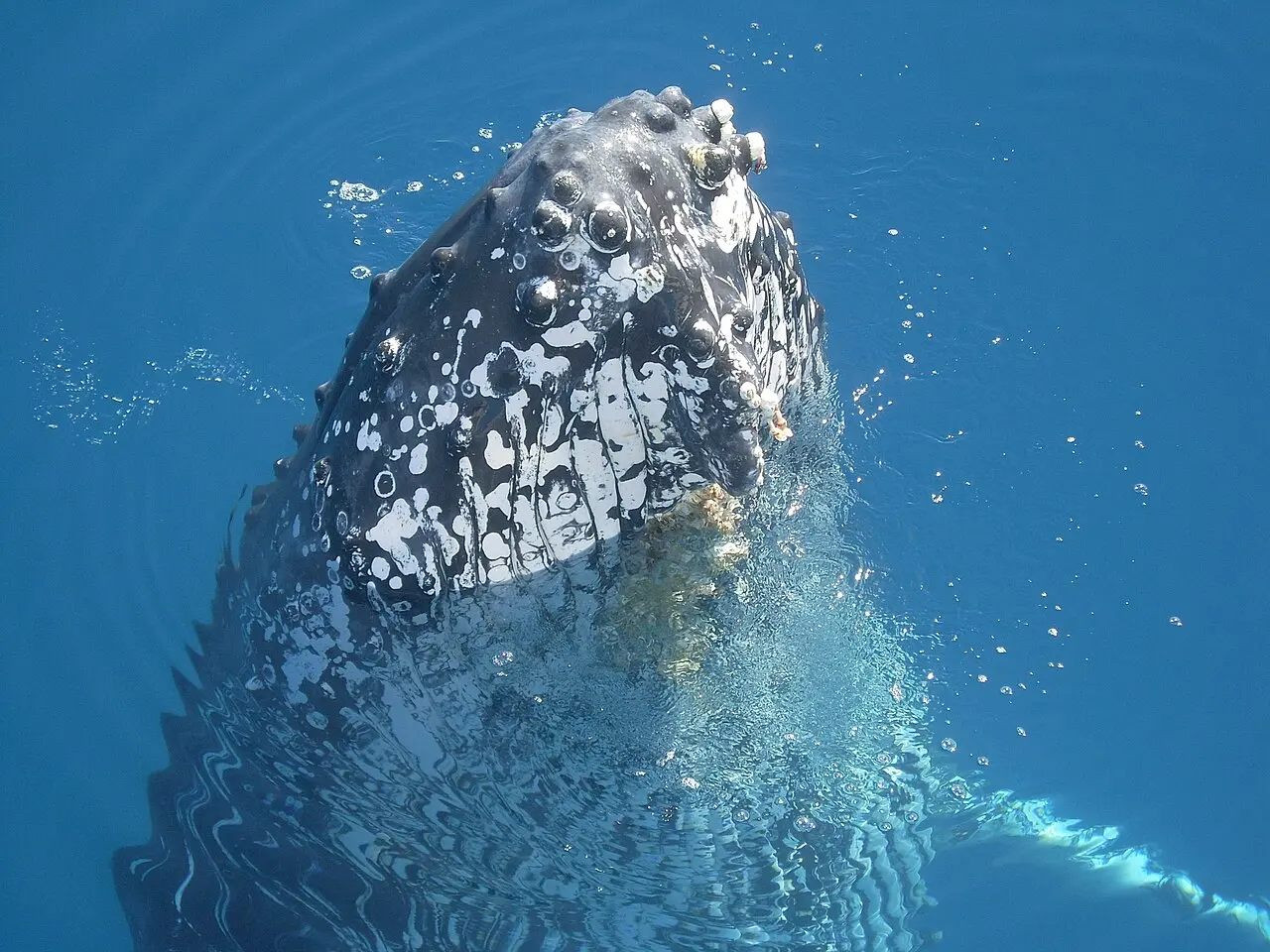
Whales around Hervey Bay
Straight answers
Frequently asked questions
When is whale season in Hervey Bay?
Use mid-July to late October as the core 2026 commercial window. Some destination material uses July–November, but each operator sets its own dates.
What is the best month for whale watching?
August and September are the best all-round planning choice because they sit in the middle of the season. No month guarantees a particular behaviour.
Are whale sightings guaranteed?
Wildlife cannot be guaranteed by an independent guide. Some operators have a conditional sighting policy; read its current terms before booking.
Is a morning or afternoon cruise better?
Morning can suit travellers concerned about wind and motion, while afternoon helps on an arrival day. Forecast and vessel format matter more than a universal rule.
Can young children go?
Many operators accept children, but infant rules, prams, child fares and facilities vary. Confirm the exact vessel and policy directly.
Source ledger
Sources checked
Time-sensitive details were checked against operator-owned or official sources. Prices and operating details can change; recheck before paying.
- Queensland Parks — whales in Great Sandy Marine Park — checked 27 July 2026
- Visit Fraser Coast — whale watching — checked 27 July 2026
- Current local operator list and whale facts — checked 27 July 2026
- CASA — flying near wildlife — checked 27 July 2026
Keep planning